Mining asset management software for equipment, tools and spares
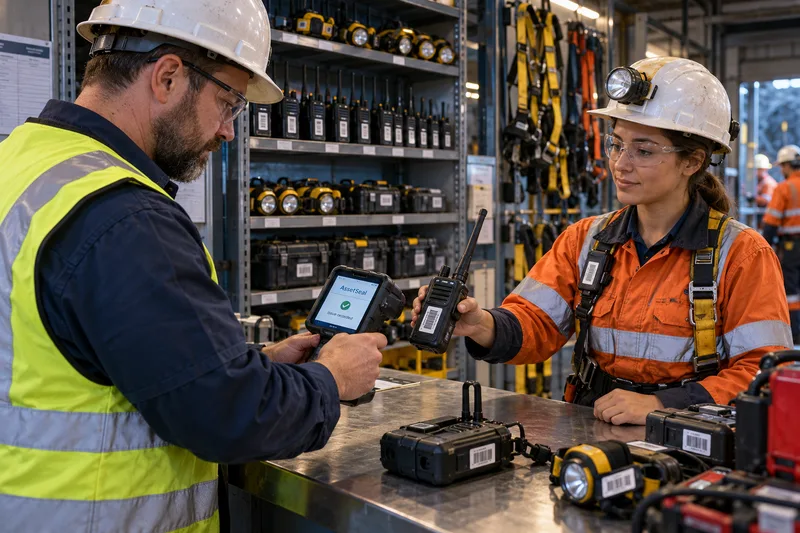
Track mining equipment, tools, components, critical spares and issued assets across pits, plants, workshops and stores. AssetSeal connects identification, location, condition, assignment and maintenance history in one structured asset record.
Equipment and component recordsCritical spare-parts visibilityShift-level issue and return
AccurateSpares and inventory counts
FasterEquipment location and verification
0/7Shift-level custody visibility
Mining equipment registerCritical spare-parts visibilityShift-based issue and returnComponent and workshop trackingRFID and barcode asset verificationAsset cost and lifecycle recordsMining equipment registerCritical spare-parts visibilityShift-based issue and returnComponent and workshop trackingRFID and barcode asset verificationAsset cost and lifecycle records
Where it fits
Built around critical mining asset workflows
01
Mining equipment register
Maintain structured records for mobile equipment, attachments, support vehicles, fixed equipment and other operational assets, including location, condition, assignment, documents and lifecycle status.
Record critical spares by store, workshop, staging area or other operational location so maintenance teams can verify availability and identify where each item was last recorded.
Assign reusable tools, radios, lamps, instruments and safety equipment to an employee, crew or shift. Record returns and identify outstanding items before responsibility becomes unclear.
Mining assets move across demanding sites. Their records need to keep up.
01
Critical spares cannot be located when needed
A component may appear available in a spreadsheet or inventory system while its physical location is unclear. Maintenance teams lose valuable time searching stores, workshops and staging areas while equipment remains unavailable.
02
Equipment moves without a reliable record
Tools, attachments, components and support equipment move between pits, workshops, processing areas and stores. When those transfers are not recorded consistently, teams cannot confidently determine the asset’s current or last verified location.
03
Issued equipment is difficult to reconcile
Radios, lamps, instruments and reusable safety equipment may be assigned by employee, crew or shift. Without a structured issue-and-return process, overdue and unreturned items are difficult to identify.
04
Manual asset counts consume operational time
Large sites, distributed storage areas and changing field conditions make spreadsheet-based verification slow and inconsistent. Teams need a faster way to confirm assets without rebuilding the asset register after every audit.
Chapter 02
One platform for mining assets across the operation
Where supported by the configured mobile workflow, a location can be captured when an asset is registered, inspected or verified, helping teams associate field activity with the relevant operational area.
01
Mining equipment register
Maintain structured records for mobile equipment, attachments, support vehicles, fixed equipment and other operational assets, including location, condition, assignment, documents and lifecycle status.
02
Critical spare-parts visibility
Record critical spares by store, workshop, staging area or other operational location so maintenance teams can verify availability and identify where each item was last recorded.
03
Shift-based issue and return
Assign reusable tools, radios, lamps, instruments and safety equipment to an employee, crew or shift. Record returns and identify outstanding items before responsibility becomes unclear.
04
Component and workshop tracking
Follow serialized components through removal, inspection, repair, storage, reassignment and return to service while retaining movement and maintenance history.
05
RFID and barcode asset verification
Use supported RFID handhelds, barcode scanning or NFC identification to verify tools, equipment, components and spares according to the asset type and operating environment.
06
Asset cost and lifecycle records
Maintain acquisition details, assigned location, condition, warranty information, supporting documents and disposal history in a traceable asset record.
Chapter 03
From asset registration to operational action
Step 01
Register and identify
Create the asset record and apply the appropriate RFID tag, barcode, QR code or NFC identifier. Record its category, site, operational area, condition and responsible team.
Step 02
Scan and update
Use supported mobile devices, rugged handheld readers or configured read points to verify assets during receiving, issue, return, transfer, maintenance and audit workflows.
Step 03
Review exceptions
Compare scanned assets with the expected inventory for the location, employee, crew or shift. Identify missing, misplaced, overdue or unregistered items for review.
Step 04
Resolve and document
Transfer, recover, service, replace or retire the asset while preserving the responsible user, date, status and activity history.
Chapter 04
What better mining asset visibility changes
01
Maintenance teams can locate recorded spares fasterVerify availability and last recorded location before teams begin searching multiple stores or staging areas.
02
Issued equipment has clear accountabilityConnect reusable equipment to the responsible employee, crew or shift and record when it is returned.
03
Asset verification becomes more consistentReplace disconnected spreadsheets and manual lists with a repeatable scanning and exception-review process.
04
The asset register reflects field activityPreserve transfers, condition changes, maintenance activity and disposal decisions against the corresponding asset.
Traceable records
AssetSeal records authorized scans, transfers and status changes with the associated user and time information, helping teams review asset history during operational audits and internal investigations.
Chapter 05
Identification hardware selected for the environment
AssetSeal can maintain records for mobile and fixed equipment, attachments, serialized components, tools, critical spares, radios, instruments and reusable issued equipment. The exact structure can be configured around the site, plant, workshop, store and operational hierarchy.
Industrial RFID tags are available for metal surfaces, moisture, dust, vibration, impact and temperature exposure. The appropriate tag and mounting method must be selected according to the asset, read requirements and operating environment.
AssetSeal mobile workflows can support offline asset verification where configured, allowing authorized users to capture activity and synchronize it when an approved connection becomes available.
Reusable equipment can be issued to the appropriate employee, crew or operational assignment. Return activity and outstanding items can then be reviewed through the configured workflow.
No. AssetSeal can support RFID, barcode, QR and NFC identification. The best option depends on the asset’s value, material, environment, required scan range and verification frequency.
Serialized components can be transferred through removal, inspection, repair, storage and reassignment stages while retaining their movement, condition and maintenance history.
Next step
Build a dependable record of mining assets
Show us how equipment, tools, components and spares move across your operation. We will review your site hierarchy, asset categories and verification requirements, then demonstrate how AssetSeal could support your workflow.
 Canada
 USA
USA UAE
UAE India
India UK
UK
 01
01