 01
01Work-in-progress visibility
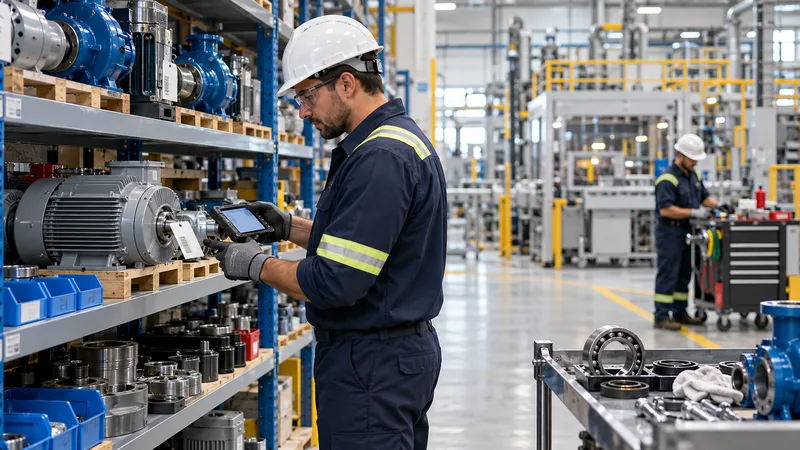
Track jobs, carriers, containers and other work-in-progress assets as they move through production stages using mobile scanning or configured RFID read points.
Explore work in progress Canada
 USA
USA
 UAE
UAE
 India
India
 UK
UK
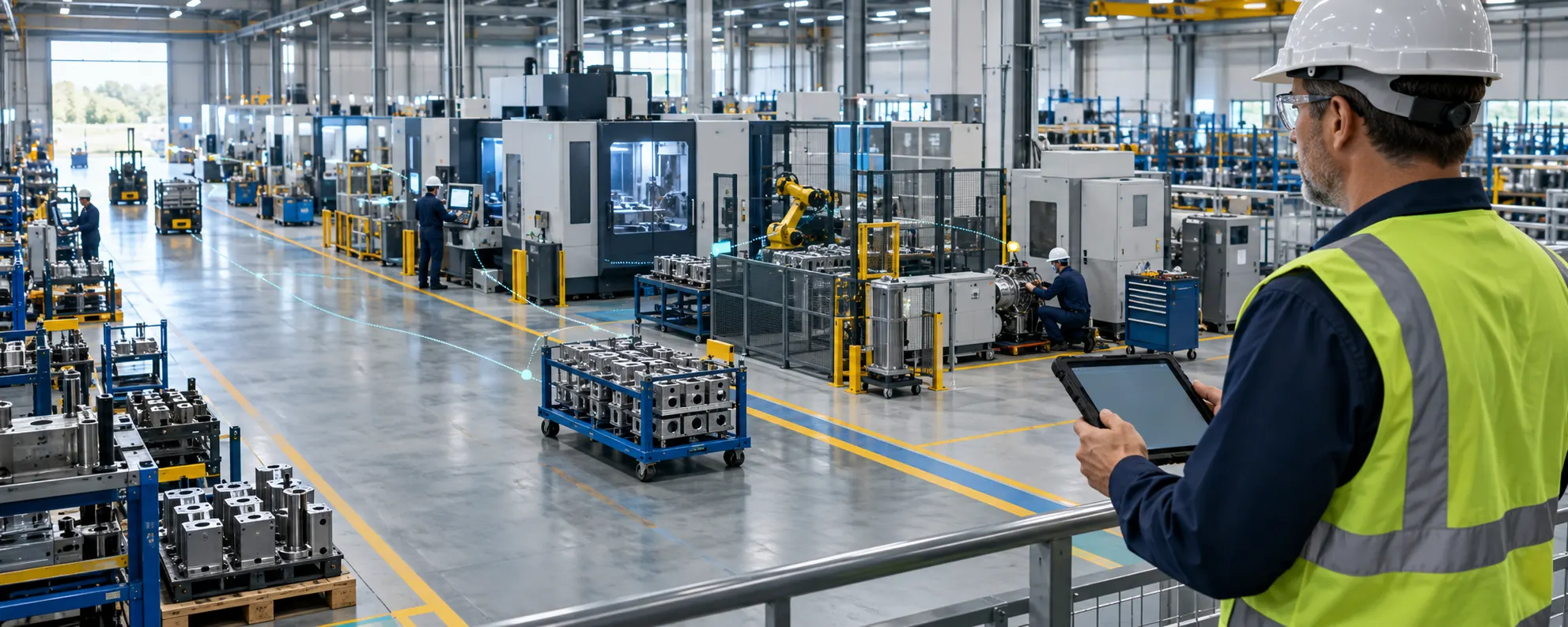
Manage production assets, tooling, work in progress, spare parts and maintenance equipment across plants, lines, stores and workshops—with a clear record of location, custody, condition and status.
 Work-in-progress assetsTools, dies and equipmentMaintenance and service assets01
Track jobs, carriers, containers and other work-in-progress assets as they move through production stages using mobile scanning or configured RFID read points.
Explore work in progress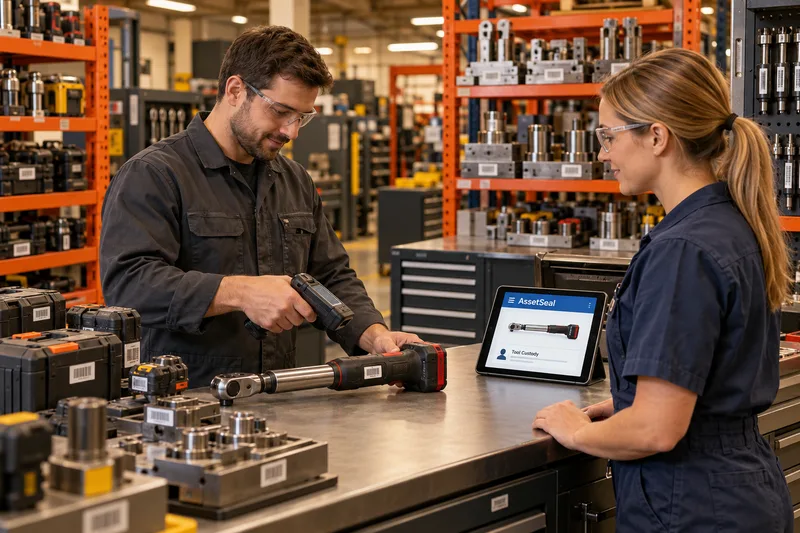 02
02Issue and return tools, dies, moulds, gauges and fixtures against operators, departments or work orders, with due dates and an auditable custody history.
Explore tooling control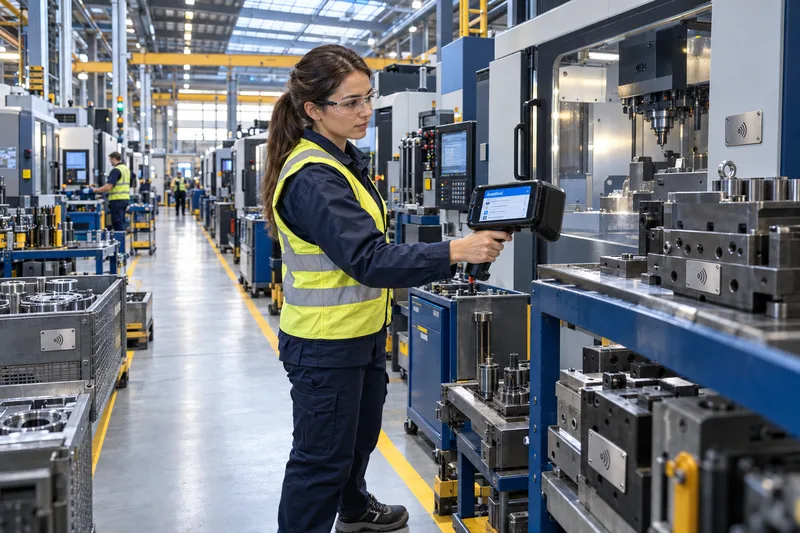 03
03Maintain an accurate record of critical spares across stores and maintenance areas, including quantity, location, movement and availability.
Explore spare partsJobs, carriers, containers and materials move between production stages without a dependable location record, making delays and misplaced work difficult to investigate.
High-value tools, moulds, dies, fixtures and gauges move between tool cribs, operators and production cells without a consistent custody and location history.
Technicians may struggle to find equipment, service tools and critical spares when location, condition and maintenance information are kept in separate systems or spreadsheets.
Manual inventory and asset counts consume staff time, interrupt normal operations and provide information that may already be outdated when counting is complete.
AssetSeal brings production assets, tooling, work in progress, maintenance equipment and critical spares into one accountable operational record.
Track jobs, carriers, containers and other work-in-progress assets as they move through production stages using mobile scanning or configured RFID read points.
Issue and return tools, dies, moulds, gauges and fixtures against operators, departments or work orders, with due dates and an auditable custody history.
Connect maintenance schedules, service history, current location and asset status so technicians can identify equipment requiring attention.
Maintain an accurate record of critical spares across stores and maintenance areas, including quantity, location, movement and availability.
Verify equipment, tooling and inventory using barcode or RFID handhelds while reducing the time and disruption associated with manual counts.
Review asset activity, movement and availability records to identify underused equipment and support repair, redeployment or disposal decisions.
Assign RFID or barcode identification suited to the asset and plant environment, including appropriate options for metal surfaces, heat, moisture or wash-down areas.
Record asset activity using mobile devices, rugged handhelds or configured RFID read points at production transitions, stores, workshops and dock doors.
Compare expected assets and locations against captured activity to identify missing, misplaced or unexpected items requiring investigation.
Route exceptions to production, maintenance, stores or supervisory teams with the available asset, location, custody and status information.
Less disruptive asset verificationVerify plant assets and inventory with less dependence on lengthy manual counting processes.
Stronger tooling accountabilityMaintain a traceable history of tooling issued to operators, departments and work orders.
Better maintenance coordinationConnect asset location, status and service records so maintenance teams have clearer information for planning and follow-up.
Better-informed asset decisionsUse movement, availability and recorded activity to support repair, redeployment and disposal decisions.
AssetSeal records supported scans, transfers and status changes with the responsible user and timestamp, creating a traceable history for internal verification and audit preparation.
Capture tagged assets at selected operational transition points where fixed RFID infrastructure is appropriate.
02Scan and update assets across production cells, stores, workshops, yards and other plant areas.
03Use appropriately specified barcode or RFID identification for machinery, metal tooling, containers and other industrial assets.
Yes. RFID tags designed for metal surfaces can be used on suitable machinery, tooling, racks and industrial equipment. The tag type, operating frequency and mounting method should be selected according to the asset and plant environment.
AssetSeal can record tagged jobs, carriers or containers through mobile scanning or configured fixed RFID read points. The appropriate capture method depends on the production process, environment and required level of automation.
Tags can be selected for conditions such as heat, moisture, dust, chemicals or frequent wash-down. The environmental requirements should be reviewed before selecting the tag material, enclosure and mounting method.
Yes. Tooling, dies, fixtures, maintenance equipment, spare parts and production assets can be maintained in one asset register while retaining the relevant category, location, custodian, status and history for each item.
Yes. Barcode can support economical individual scanning, while RFID can support faster contactless identification and selected automated capture workflows. Organizations can use either technology or a combination based on the asset and process.
Show us how assets, tooling, work in progress and spare parts move through your operation. We will demonstrate how AssetSeal can support your asset register, custody workflows, plant verification and maintenance coordination.
We review your plants, asset categories and current workflows.
We recommend suitable processes, tags and capture options.
We demonstrate a practical scenario based on your manufacturing environment.
