Asset management software for banks and financial institutions
Manage branch equipment, IT devices, physical records and other operational assets across branches, offices and secure storage locations. AssetSeal connects every asset with its location, custodian, condition and lifecycle history.
Branch equipment visibilityPhysical record trackingCustody and movement history
Role-based accessAuthorized activity historyStructured asset records
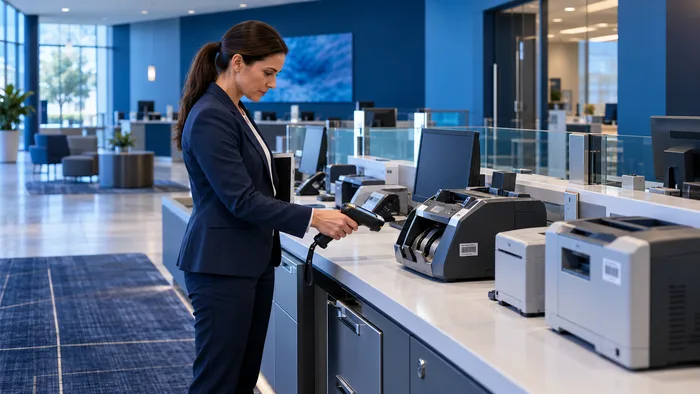
Branch asset visibility
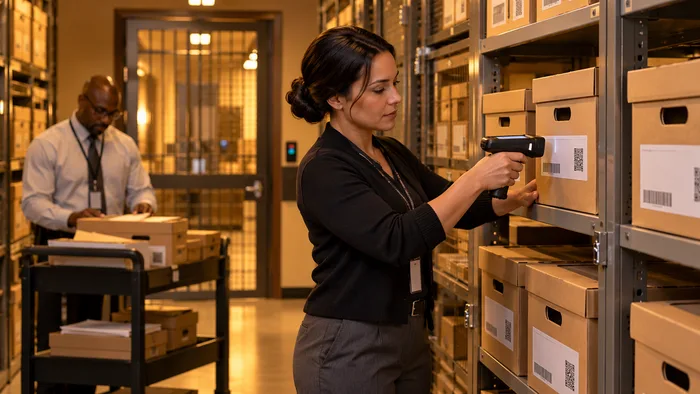
File and equipment lookup
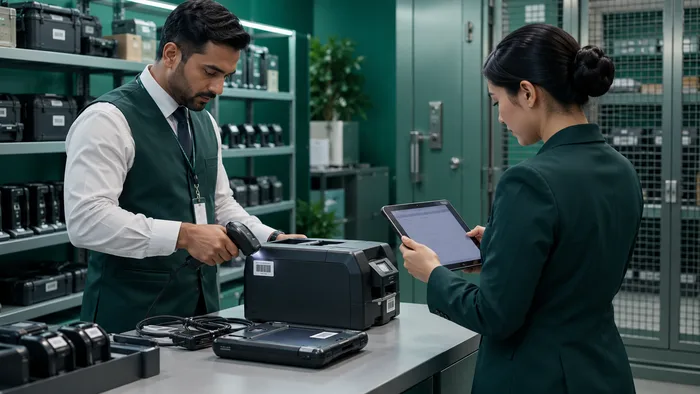
Custody and movement records
Branch network asset registerPhysical record trackingCustody and handover recordsEquipment lifecycle historyMobile branch verificationStructured audit reportsRFID, barcode and NFC supportAsset transfer historyWarranty and document recordsMulti-branch reportingBranch network asset registerPhysical record trackingCustody and handover recordsEquipment lifecycle historyMobile branch verificationStructured audit reportsRFID, barcode and NFC supportAsset transfer historyWarranty and document recordsMulti-branch reporting
Branch equipment audit
Organize equipment by financial institution, region, branch, department, room or secure area while giving authorized head-office teams a consolidated view.
Physical-record tracking
Track identified files, folders and archive boxes by location and custodian, with movement and handover history retained in the corresponding record.
Equipment custody and handover
Record who received, transferred or returned an asset or physical record, together with the associated location and time information.
The challenge
Branch assets and physical records move faster than spreadsheets can follow
TodayWith AssetSeal
01
Branch equipment is difficult to verify centrally
Branches contain IT devices, cash-handling equipment, printers, security devices and other operational assets. Without a consistent register, head office cannot confidently review what is assigned to each location.
Branch network asset register
Maintain a structured asset register across the branch network
02
Physical records are difficult to locate
Files and archive boxes may move between employees, departments, branches and secure storage areas. When those handovers are not recorded, retrieval takes longer and custody becomes unclear.
Physical record tracking
See the last recorded location and custodian
03
Audit preparation requires manual reconciliation
Asset, location and custody information may sit in separate spreadsheets or departmental systems. Teams spend time reconciling records before internal review can begin.
Structured reports and exports
Use structured reports to support audit preparation
04
Equipment reaches end of life without a clear plan
ATMs, branch technology and office equipment can remain in service without a consolidated view of condition, warranty, maintenance history or lifecycle status.
Equipment lifecycle planning
Review asset age, condition and warranty information together
Capabilities
One asset record across branches, offices and secure storage
01
Branch network asset register
Organize equipment by financial institution, region, branch, department, room or secure area while giving authorized head-office teams a consolidated view.
03
Custody and handover records
Record who received, transferred or returned an asset or physical record, together with the associated location and time information.
05
Mobile branch verification
Use supported RFID readers, barcode scanning or NFC identification during branch visits and scheduled asset audits.
AssetSeal coreOne governed record
02
Physical record tracking
Track identified files, folders and archive boxes by location and custodian, with movement and handover history retained in the corresponding record.
04
Equipment lifecycle planning
Maintain acquisition details, condition, warranty information, maintenance history and lifecycle status to support informed refresh decisions.
06
Structured reports and exports
Generate asset, location, custody and activity reports to support authorized operational reviews and audit preparation.
How it works
From registration to branch-level control
01
Register and identify
Create the asset or physical-record entry and connect the appropriate barcode, QR code, NFC or RFID identifier.
02
Assign and transfer
Assign equipment and records to the correct branch, department, secure area or authorized custodian, and record approved movements.
03
Verify and reconcile
Compare physically scanned items with the expected register to identify missing equipment, undocumented transfers and records requiring review.
04
Investigate and update
Route discrepancies to the appropriate operations, IT, security or records-management team and retain the resulting status history.
Governance built in
Structured records for stronger operational governance
Role-based access, authorized activity history and structured reporting help teams maintain consistent asset and record information.
Record custodyInternal audit supportRetention informationBranch asset register
01
Role-based access
Control which users can view, create, update, approve or review asset information according to their responsibilities.
Built in
02
Authorized activity history
Retain user and time information for supported scans, transfers, custody changes and lifecycle status updates.
Built in
03
Consistent asset and custody records
Keep ownership, location, custodian, condition and supporting documents together in the applicable record.
Built in
04
Structured reports and exports
Produce reports and structured exports for reconciliation, management review and authorized audit activity.
Built in
Outcomes
What stronger branch asset control looks like
01
Head office can review assets across the branch network
02
Physical records retain location and custody history
03
Audit preparation starts with structured records
04
Equipment refresh decisions use current lifecycle information
Who benefits
One record, useful to every team
Asset and facilities managers
Review equipment by branch, department, assigned custodian and lifecycle status.
IT and operations
Maintain consistent records for branch devices, security equipment and other operational assets.
Finance and procurement
Review acquisition, assignment, warranty and lifecycle information when planning purchases and replacements.
Internal audit and records management
Access authorized custody history, activity records and supporting documents during internal reviews.
Connects with your stack
AssetSeal can exchange approved asset data through configured APIs and structured import or export processes. Integration scope depends on the target system, security requirements and implementation design.
ERPFixed-asset ledgerIdentity and accessTicketingBI and reporting
Identification options
Identification options for branch and records environments
Compliance and reportingRecord custodyInternal audit supportRetention informationBranch asset register
Getting started
What a working session looks like
01
Assess
We review your branch structure, asset categories, physical-record workflows and existing systems.
02
Recommend
We identify suitable AssetSeal workflows, identification methods and scanning devices.
03
Demonstrate
We demonstrate the platform using a banking or financial-services scenario aligned with your requirements.
FAQ
Questions banking and financial-services teams ask
Yes. Identified files, folders and archive boxes can be managed with location, custodian, transfer history and configurable retention information. Sensitive customer information should not be encoded directly in the visible label or RFID value.
Data residency depends on the selected hosting architecture, cloud region and contractual configuration. Required jurisdictions and security controls should be confirmed during solution design before deployment.
Authorized employees can use supported mobile devices or RFID readers for asset verification, issue, transfer, return and custody workflows according to their assigned permissions.
AssetSeal is designed to manage physical assets and identified records. The deployment should use internal reference identifiers and avoid placing confidential customer or account information directly on tags or labels.
Asset data can be exchanged through configured APIs or structured imports and exports. The available fields, update direction and reconciliation rules must be defined for the target financial system.
No. AssetSeal can support barcode, QR, NFC and RFID identification. The appropriate method depends on the asset type, material, value, scan volume and security requirements.
Next step
Build a dependable asset record across every branch
Show us how equipment and physical records move through your branch network. We will review your locations, asset categories, custody workflows and reporting requirements, then demonstrate how AssetSeal could support your operation.
 Canada
 USA
USA UAE
UAE India
India UK
UK